
At Robotic
Steelworks, we combine advanced robotics and precision engineering to
manufacture high-quality palisade fencing solutions. Thanks to automation, we
produce standard palisade fence panels with a range of angle iron sizes,
including:
- 25×25 mm
- 30×30 mm
- 40×40 mm
- 50×50 mm – the strongest and most durable option
We offer angle
iron thickness options from 2 mm to 5 mm, ensuring customizability based on
your specific security or aesthetic needs.
Fence Panel
Dimensions
- Heights available: 1.2 m, 1.5 m, 1.8 m, 2.0 m, 3.0 m
and custom heights on request
- Standard panel width: 3.0 m
- Optional doggy bars can be added between pales for
extra security, especially in residential or pet-sensitive environments.
Steel Types:
Hot Rolled vs. Cold Rolled Angles
Palisade fences
are manufactured using two main types of angle irons:
1. Hot Rolled
Angles (ArcelorMittal)
- Produced by roll-pressing steel at temperatures above
1,700˚F
- The high heat allows the steel to be easily formed
and shaped
- Results in stronger, more rigid angles ideal for
high-security fencing
- Typically used in commercial, industrial, and high-risk
areas
- Higher cost due to the robust performance
2. Cold Rolled
Angles
- Begins as hot rolled steel, but undergoes further
refinement at room temperature
- Involves rolling, grinding, and polishing to create
smoother, more precise finishes, like steel sheets
- Typically used for applications where appearance and dimension
tolerance are critical
- Offers a more affordable solution with a cleaner
finish, ideal for residential areas
Why Choose
Robotic Steelworks?
- Precision Manufacturing: Robotics ensure consistency,
quality control, and fast turnaround times.
- Durability: All steel used is corrosion-resistant and
can be galvanized or painted for additional protection.
- Customization: From height and width to angle size
and accessories, our fences can be tailored to your specifications.
- Expert Guidance: Our experienced team assists with
everything from product selection to installation planning.
Applications
of Palisade Fencing
Our palisade
fences are ideal for a variety of uses:
- Residential security fencing
- Perimeter fencing for factories and warehouses
- School and institutional fencing
- Public infrastructure and utility sites
- Farms and rural property fencing
Frequently
Asked Questions
Q: What is the
difference between hot rolled and cold rolled fencing?
A: Hot rolled fences are stronger and better for heavy-duty applications, while
cold rolled fences offer a smoother finish for aesthetic purposes.
Q: Can you
install fencing at non-standard heights or terrains?
A: Yes, our robotic processes allow for custom configurations and special
terrain adjustments.
Q: Do you offer
galvanized palisade fencing?
A: Absolutely. We offer hot-dip galvanizing for enhanced corrosion resistance,
ideal for coastal and industrial environments.
Request a
Free Quote Today
Contact Robotic
Steelworks to request a custom quote or speak with one of our fencing
specialists. We serve clients across provinces e.g., Limpopo, Mpumalanga,
Northern Cape, Western Cape, etc., and provide delivery and installation
options.
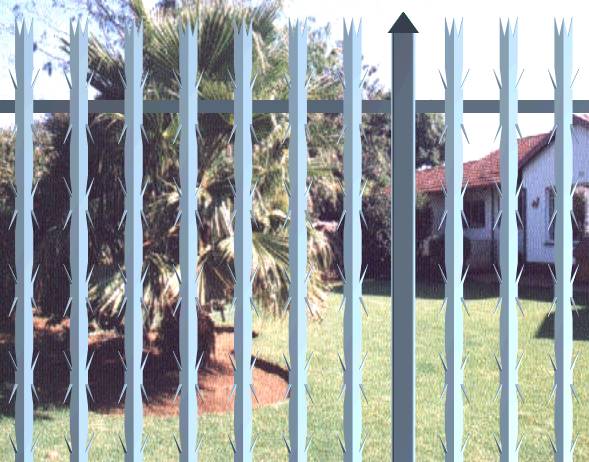
Extra-Razor Palisade Fencing
On a standard palisade panel, Robotic Steelworks offers three different pale tip options:
A spear point (also V cut) option, fishtail (2-spiked) or a 3-spiked option.
Apart of the pale tip options, Robotic Steelworks is one of the few companies worldwide that can add additional spikes to a spear point, fish tail or 3-spiked pale due to robot plasma cutting! A maximum of 10 additional extra long spikes can be cut on each side of the pale. Clients can design their own extra razor palisade fence with 5, 7, 11, 15 or 23 spiked panels! These extra razor panels can be designed with unique razor patterns.
-Full extra razor panel: 23 spikes on each pale, thus extra long spikes on pales
-Semi extra razor panel: Extra razor pales mixed with normal 40×40 angle iron pales
-Mixed extra razor panel: Extra razor pales mixed with razor pales
-Design extra razor panel: 5-23 spikes on each pale, and design your own panel
-All of the above extra razor panels are available as a bolted palisade fence

Bolt-on Palisade Fences
The bolt-on palisade fence is completely different from the standard welded palisade fence. It uses high tensile bolts and anti-vandal shear nuts to fix pales to the crossbars. This makes it possible for the nuts to be removed once the back of the nuts have been sheared off. Thus pales are fixed into position on the crossbars by means of bolts through the pale and crossbar with nuts at the rear of the crossbar. Once installation is finished, the bolts are tightened and snapped-off.
Advantages of the bolt-on palisade fence:
- It is a cost effective fencing solution where the terrain is uneven, contour following fence system;
- No stacking necessary on uneven ground and the same gap at the bottom of the fence;
- It can easily be installed on slopes, up to 45 degrees climb;
- No electricity or welding is required on the bolt-on palisade fence;
- Anti-vandalize bolts and nuts are used which are stronger than welding (one M8 bolt breaks nearly by 1 ton load);
- The bolt-on palisade fence is easy to install, ideal for do-it-yourself and no special equipment or skills are required;
- The entire bolt-on palisade fence can be dismantled are re-erected at a different location

Slotted Channel Palisade Fence
On the slotted channel palisade fence, the pales are fixed in position by inserting them through slots in the crossbars and welding the pale to the crossbar. The crossbars, with slots punched through the upper face of the crossbar, accommodate the pales which are inserted through the slot and welded to the crossbar.
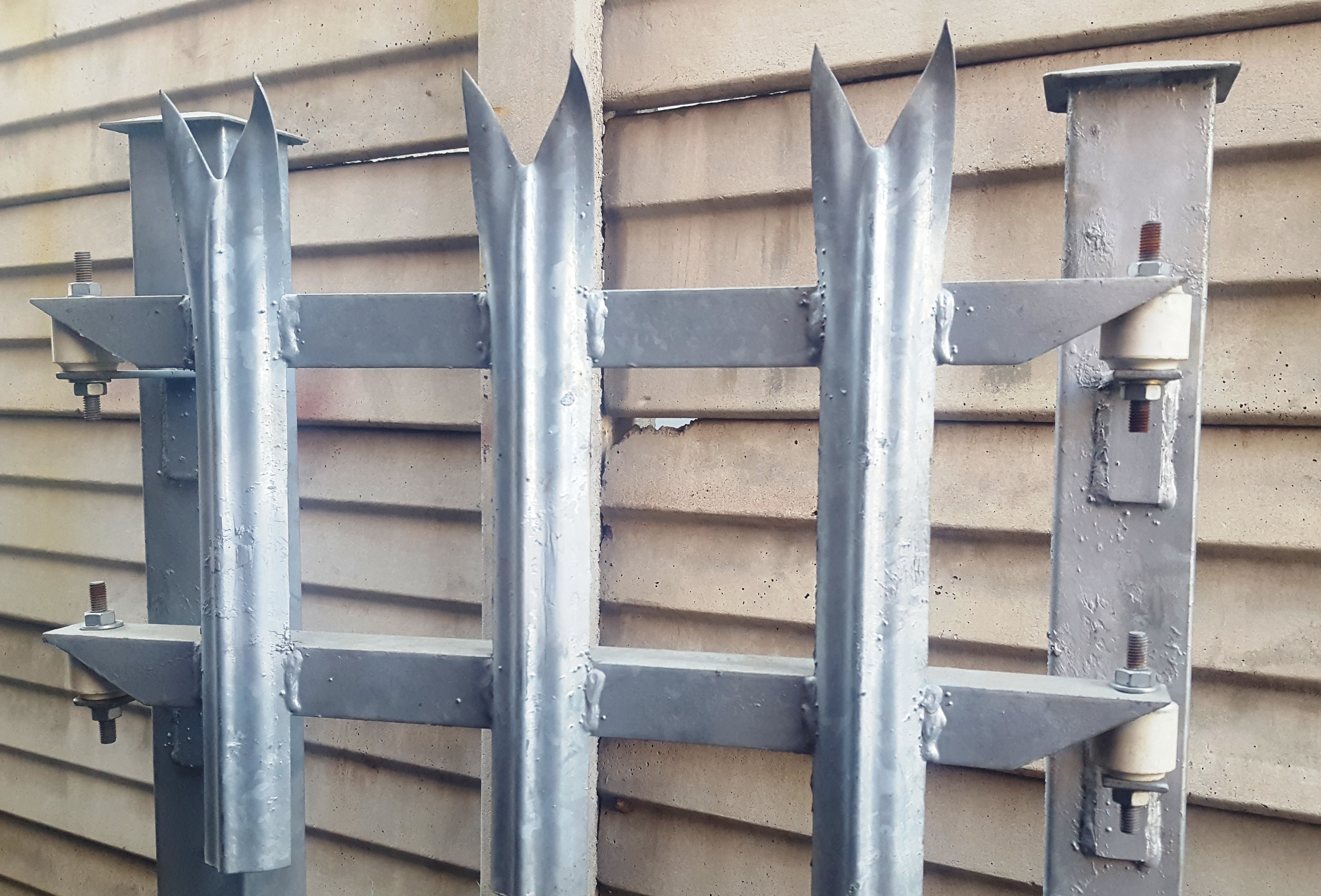
D Section Palisade Fences
A standard steel palisade panel consists of vertical and horizontal pales. The standard vertical pale profile is an angle iron, but Robotic Steelworks can also supply a D section vertical pale profile. The D section refers to the shape of the vertical pale.
The D section palisade fence is aesthetically eye-pleasing but also strong, durable and easy to install. The fence is also available in various lengths and heights best suited to your requirements.
HINTS FOR THE INSTALLATION OF A PALISADE FENCE DIY:
Should you want to install the palisade fences yourself, here are a few hints:
- Do not plant all the posts first, and then insert the palisade fences in-between. Rather plant two posts, weld a palisade panel, plant one post, weld a palisade panel, and so on
- Weld steel pieces (anchors) on the bottom of the posts, so that nobody can pull them out after the concrete has dried out. Please note: our posts include the flat pole cap & the bottom mounting anchors
- When you plant the posts, use a water level
- If you need a gate, and you have never welded before, rather ask us, we can manufacture the gate(s) for you
- If you still want to weld something yourself, remove all thinners & paint from the welding place, as thinners / paint might catch fire from welding sparks
- Should it rain, or the ground is wet, do not use electricity
- Secure any electrical extensions and cables so that nobody can step on it
- Use only proper electrical devices
- Looking in a welding arc can cause serious damages to the eyes, wear a proper welding helmet
- Cut steel is very sharp, to avoid injuries, wear thick leather gloves during handling and installation
- Do not rush, accidents occur then
- Please note: welding is a trade. There are many more things to know. If you want quality work, it is better, if the job is done by a professional
- Our Bolt-on palisade fence is easy to install, if you want to avoid welding, rather go for this option.
Please note: we do not take any responsibility for any damages or injuries whatsoever.